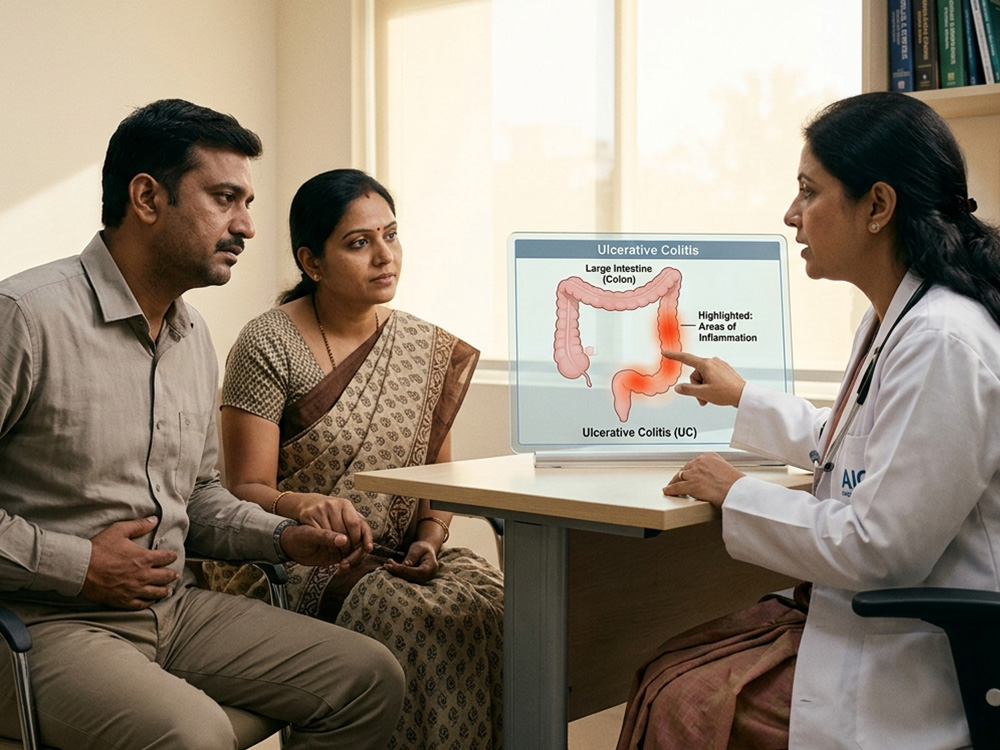
If you or a loved one has recently been brought face-to-face with Ulcerative Colitis (UC), it is completely normal to feel overwhelmed. Finding blood in your stool or dealing with sudden, uncontrollable runs to the restroom can be deeply unsettling.
Please know this: Ulcerative Colitis is a manageable medical condition, not a personal failure. With early diagnosis and target-driven therapy, the vast majority of patients live normal, highly successful, and active lives.
In this blog, we shall take a deep dive into what the early symptoms of ulcerative colitis are, risk factors, treatment options, and important tips for patients their families.
What is Ulcerative Colitis?
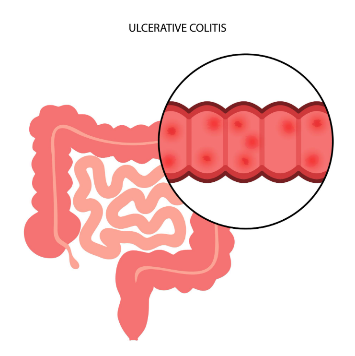
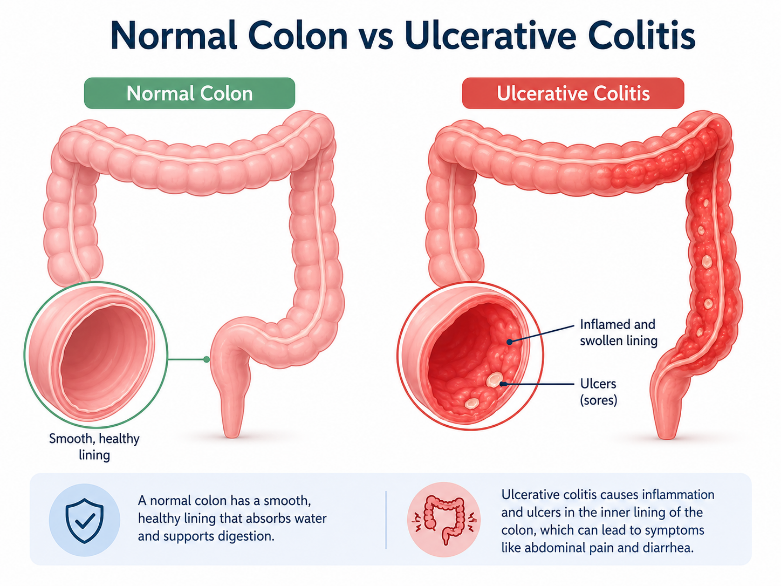
Ulcerative colitis, also called UC, is a long-term disease in which the inner lining of the large intestine becomes inflamed. The large intestine includes the colon and rectum. Because the lining becomes swollen and ulcerated, patients may pass blood or mucus in stool and may feel an urgent need to go to the toilet again and again.
UC is not the same as ordinary acidity, piles, food poisoning or ‘simple loose motion’. It is a type of inflammatory bowel disease, also called IBD. It usually has two phases:
Flare: Ulcerative colitis symptoms become active.
Remission: UC symptoms are controlled and the patient feels well.
Many people with UC live a normal, active and successful life when the disease is diagnosed early, treated properly and monitored regularly.
Common Ulcerative Colitis Symptoms
The symptoms of UC vary from person to person. Some patients have mild disease limited to the rectum, while others may have inflammation in a larger part of the colon.
Common ulcerative colitis symptoms include:
- Loose stools or diarrhoea
- Blood or mucus in stool
- Urgency to pass stool
- Feeling of incomplete evacuation
- Crampy abdominal pain
- Tiredness and weakness
- Loss of appetite
- Weight loss
- Fever during severe flare
- Anaemia due to ongoing blood loss
UC can also affect areas outside the intestine. Some patients may develop joint pain, mouth ulcers, eye redness, skin rashes or low back pain.
Why Does Ulcerative Colitis Happen?
UC happens because the body’s immune system becomes overactive and attacks the lining of the colon. The exact cause is not always clear. It may involve a combination of genetic tendency, gut bacteria, environmental factors and immune system changes.
Important point: UC is not caused by eating one wrong food, stress alone, or poor hygiene. Stress and certain foods may worsen symptoms in some patients, but they are usually not the root cause.
How is Ulcerative Colitis Diagnosed?
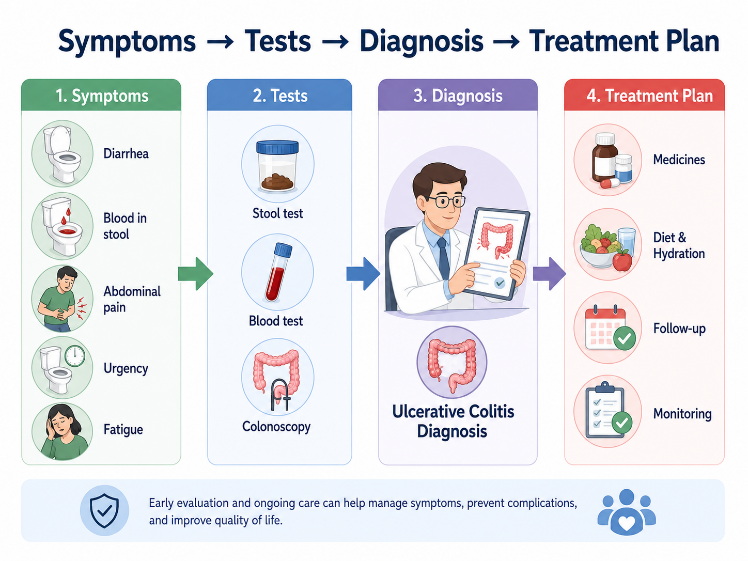
Diagnosis usually needs a combination of:
- Medical history and symptom review
- Blood tests to check anaemia and inflammation
- Stool tests to rule out infection
- Colonoscopy or sigmoidoscopy
- Biopsy from the colon lining
Loss of appetite, urgency to pass stools, mucus or blood in stools is caused by a number of underlying diseases. This is why colonoscopy is critical. It helps correctly diagnose if the underlying condition is an infection, Crohn’s disease, UC, ischemic colitis or something else. Remember correct diagnosis helps in choosing the right ulcerative colitis treatment.
Can Ulcerative Colitis Be Treated?
Yes. UC is a chronic condition, but it can be controlled very well in many patients. The goal of UC and inflammatory bowel disease treatment is not only to stop diarrhoea and bleeding, but also to heal the inner lining of the colon and prevent future complications.
Ulcerative Colitis Treatment may include:
- 5-ASA medicines such as mesalamine
- Rectal medicines such as suppositories or enemas, especially for rectal disease
- Steroids for short-term control of flare
- Immunomodulators in selected patients
- Biologic medicines
- Newer small-molecule medicines
- Surgery in severe, complicated or medicine-resistant disease
The treatment is selected according to severity, extent of disease, previous response, age, pregnancy plans, infection risk and patient preference.
Important: Steroids can be very useful during a flare, but they are not ideal for long-term maintenance. Repeated steroid use means the treatment plan needs reassessment.
Living with Ulcerative Colitis: What Patients Should Do
1. The golden rule: Take medicines regularly
Many patients stop medicines once bleeding stops. This is one of the common reasons for relapse. UC often needs maintenance treatment even when the patient feels well.
Think of UC like blood pressure or diabetes: the goal is long-term control, not only temporary relief.
2. Keep follow-up appointments
Regular follow-up helps with your gastroenterologist for ulcerative colitis are critical. They help your doctor monitor and keep track of:
- Symptoms
- Haemoglobin
- Inflammation markers
- Liver and kidney function where needed
- Medicine side effects
- Need for colonoscopy
- Vaccination status
- Nutrition and bone health
3. Track your symptoms
A simple diary can be very helpful. Note:
- Number of stools per day
- Blood in stool
- Night-time stool
- Fever
- Weight
- Food triggers
- Medicines missed
- Stress or sleep pattern
This helps the doctor judge whether symptoms are due to inflammation, infection, IBS overlap, piles, diet or medicine side effects.
4. Eat a balanced diet
There is no single ‘Ulcerative Colitis diet’ that works for everyone. Diet should be personalized.
During remission, most patients can eat a balanced diet with adequate protein, cooked vegetables, fruits as tolerated, curd/yogurt if tolerated, rice/roti, dal, eggs/paneer/fish/chicken as per preference, and enough fluids.
During a flare, the intestine may tolerate soft and low-residue food better. Examples include rice, curd if tolerated, banana, khichdi, soft, cooked vegetables, eggs, paneer, soup and oral rehydration fluids.
5. Maintain hydration
Loose stools can cause dehydration, weakness, low blood pressure and electrolyte imbalance. Drink enough water and use ORS when stool frequency is high.
6. Get vaccinated before strong immune medicines
If biologics, immunomodulators or JAK inhibitors are planned, discuss vaccination with your doctor. Some vaccines are better given before starting immune-suppressing treatment.
7. Ask about cancer surveillance colonoscopy
Patients with long-standing UC involving more than the rectum may need periodic colonoscopy to detect early precancerous changes. The timing depends on disease duration, extent, family history, inflammation severity and associated liver disease such as PSC.
The Don’ts: What Patients Should Avoid
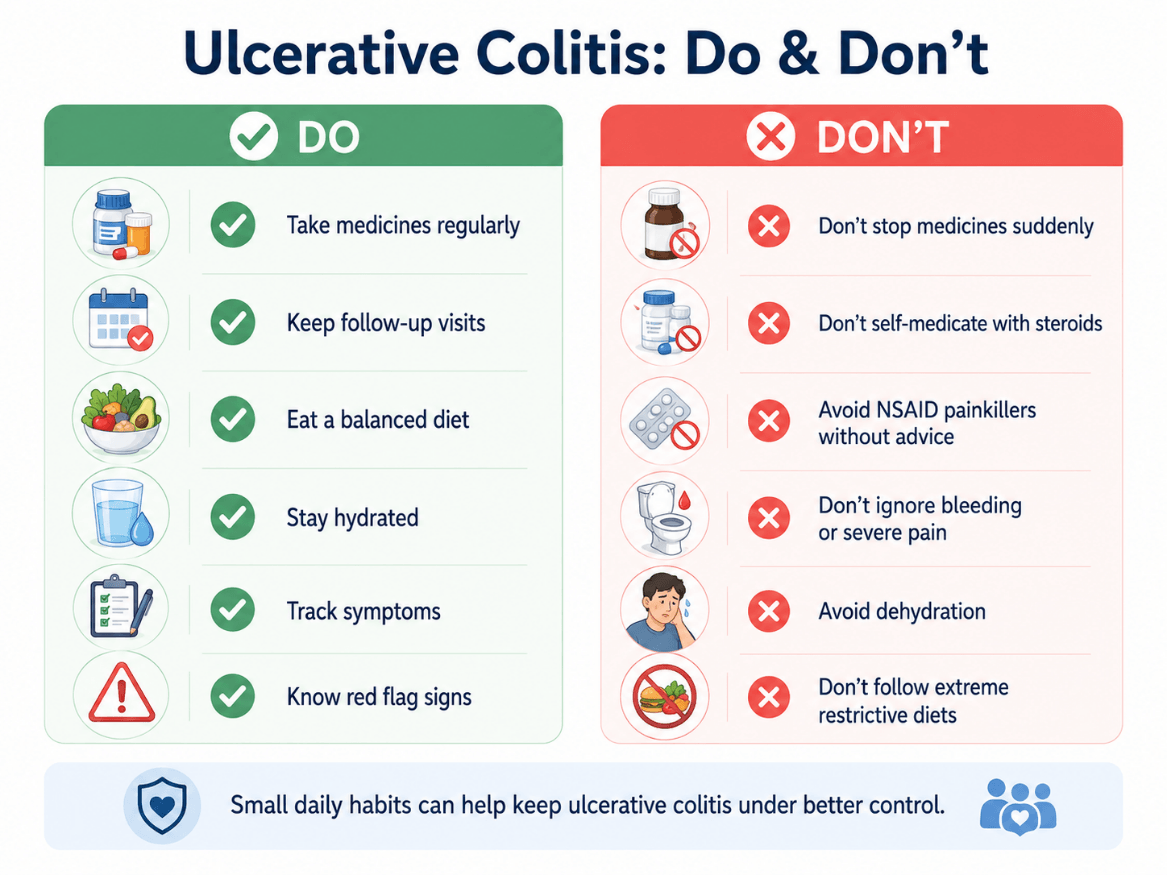
1. Do not stop medicines suddenly
Stopping medicines without advice can trigger a flare. This is especially important before pregnancy, during pregnancy and after delivery.
2. Do not self-medicate with steroids
Steroids can rapidly reduce symptoms, but repeated or unsupervised use can cause diabetes, weight gain, infections, bone weakness, cataract, mood changes and adrenal suppression.
3. Avoid frequent NSAID painkillers
Painkillers like ibuprofen, diclofenac, aceclofenac and naproxen may worsen ulcerative colitis symptoms in some patients, especially during active disease. For pain or fever, ask your doctor about safer options.
4. Do not use anti-diarrhoeal medicines during a severe flare without medical advice
Medicines that stop bowel movement may be unsafe if there is high fever, severe abdominal pain, abdominal swelling or severe bloody diarrhoea.
5. Avoid extreme restrictive diets
Patients often stop milk, wheat, rice, fruits, vegetables, spices, dal and many other foods together. This can lead to weakness, weight loss and nutrient deficiency. Avoid only foods that clearly worsen your symptoms and reintroduce foods gradually once the flare improves.
6. Do not ignore anaemia
Repeated blood loss may cause low haemoglobin. Anaemia can cause tiredness, breathlessness, dizziness, hair fall and poor work performance. It should be treated properly.
7. Avoid smoking and excessive alcohol
Smoking and alcohol can worsen overall health, increase infection risk and interfere with recovery. Alcohol may also worsen diarrhoea and dehydration in some patients.
Red Flag Signs: When to Contact Your Doctor Urgently
If you experience any of these severe/ red flag ulcerative colitis symptoms, do not wait and watch or rely on home remedies. It is important to seek urgent medical care if you experience:
- Heavy bleeding in stool
- Passing blood clots
- More than 6–8 stools per day with weakness
- Fever with bloody diarrhoea
- Severe abdominal pain
- Swollen or distended abdomen
- Persistent vomiting
- Dizziness, fainting or very low urine output
- Fast heartbeat, dehydration or extreme weakness
- Sudden weight loss
- Night-time diarrhoea that is new or worsening
- Severe rectal pain
- Eye pain, redness or blurred vision
- Painful swollen leg or sudden breathlessness
- Flare during pregnancy
- Symptoms not improving despite prescribed treatment
These warning signs of ulcerative colitis often indicate severe flare, infection, dehydration, anaemia, toxic megacolon, blood clot or another serious complication.
If you are looking for ulcerative colitis treatment in Indore, consult Dr. Dr. Arun S. Bhadauria MD, DM (SGPGI Lucknow) for accurate diagnosis and personalized treatment plans.
Final message
Ulcerative colitis is a chronic disease, but it is treatable. With the right medicines, regular follow-up, good nutrition, pregnancy planning when needed and awareness of red flag signs, most patients can live a normal and productive life.
Do not ignore blood in stool. Do not self-medicate repeatedly. Do not stop medicines without advice.
Early diagnosis and proper treatment can prevent complications and help you return to a healthy life.
Consult a gastroenterologist for ulcerative colitis if you have recurrent diarrhoea, blood in stool, unexplained weight loss, abdominal pain or symptoms suggestive of UC.
For appointments a leading IBD specialist in Indore, call: +91 75096 11222
Disclaimer: This article is for patient awareness only. It does not replace consultation with a qualified doctor. Treatment should be individualized after proper evaluation.